
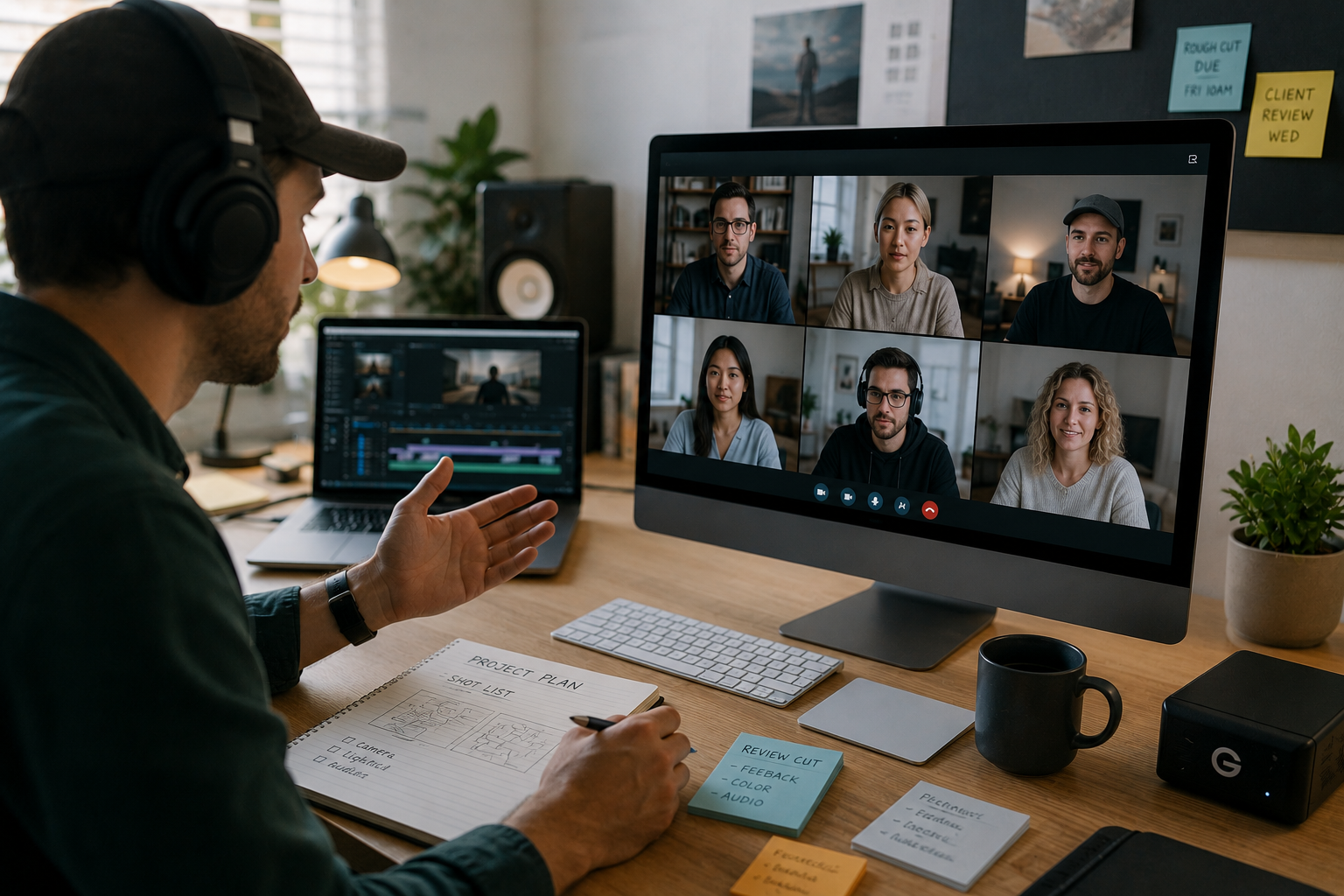
Remote production has become an established way for creative teams to deliver high-quality work without everyone being in the same location. Editors, producers, directors, motion graphics artists, sound engineers and clients can now contribute from different offices, cities or even continents. While this flexibility opens up new opportunities, it also introduces challenges that can affect communication, efficiency and the overall success of a project.
Successful remote production collaboration is not simply about using video calls or cloud storage. It requires well-planned workflows, clear communication and systems that allow creative teams to work together as though they were sharing the same production studio.
Challenge One: Communication Becomes Fragmented
One of the first problems many remote teams encounter is inconsistent communication.
Project discussions may take place across email, messaging platforms, video meetings and phone calls, making it difficult to keep track of important decisions. Team members can easily miss updates or work from outdated information.
Keeping communication organised helps avoid these issues.
Some practical approaches include:
- Using one primary collaboration platform.
- Recording important project decisions.
- Holding regular progress meetings.
- Keeping project conversations in shared channels.
- Clearly identifying responsibilities after each discussion.
A consistent communication process keeps everyone moving in the same direction.
Challenge Two: Managing Project Files
Modern productions generate enormous amounts of digital content.
Raw footage, graphics, audio files, scripts and project assets all need to be available to multiple contributors throughout production. Without clear organisation, valuable time is often lost searching for files or confirming which version should be used.
A structured file management system makes collaboration significantly easier.
| Common File Management Issue | Practical Solution |
|---|---|
| Duplicate files | Centralised storage |
| Unclear file names | Consistent naming conventions |
| Missing assets | Shared project libraries |
| Outdated project versions | Version tracking |
| Restricted access | Clearly managed permissions |
When everyone knows where files are stored, production work can continue without unnecessary interruptions.
Challenge Three: Coordinating Multiple Specialists
Remote productions rarely involve only one or two people.
Editors, producers, visual effects artists, sound designers, colourists and clients may all be reviewing or contributing to the same project. Without proper coordination, duplicated work or conflicting revisions can easily occur.
A well-organised workflow helps each contributor understand:
- What stage the project has reached.
- Which tasks are currently in progress.
- Who is responsible for each deliverable.
- When reviews or approvals are required.
This visibility reduces delays while improving accountability across the team.
Challenge Four: Keeping Feedback Organised
Creative projects often involve numerous revisions before reaching final approval.
When feedback arrives from several different sources, editors may spend considerable time interpreting comments rather than improving the production itself.
Centralising reviews allows creative teams to work more efficiently by keeping comments, approvals and revision history together.
This creates a clearer audit trail while making it easier to confirm that requested changes have been completed.
Challenge Five: Maintaining Creative Alignment
Working remotely can sometimes make it harder for teams to develop a shared creative vision.
Informal conversations that naturally occur in a production studio may not happen when everyone works independently. As a result, contributors may interpret creative objectives differently.
Regular review sessions, shared reference materials and open communication help maintain consistency throughout the production process.
The more frequently creative direction is reinforced, the less likely projects are to drift away from their original objectives.
Challenge Six: Balancing Speed With Quality
Remote production often allows projects to move faster, but speed should never come at the expense of quality.
Tight deadlines can encourage rushed reviews or incomplete communication, increasing the likelihood of errors appearing later in the project. Building structured approval stages into the production process helps maintain high standards without creating unnecessary delays.
Small quality checks performed consistently throughout production are often more effective than attempting to solve every issue at the final review.
Looking Beyond Technology
Technology plays an important role in remote production collaboration, but successful projects rely just as heavily on good planning and well-defined processes.
The most effective teams establish clear expectations from the beginning, communicate regularly and use shared systems that keep everyone informed throughout the project. When these practices become part of the workflow, collaboration feels far more natural, regardless of where contributors are located.
Final Thoughts
Remote production collaboration offers enormous opportunities for creative organisations, allowing them to bring together talented professionals from virtually anywhere. However, achieving consistent results requires more than simply working online.
By addressing common challenges such as fragmented communication, file management, project coordination and feedback collection, production teams can build smoother workflows that support both creativity and efficiency. With the right combination of technology, organisation and communication, remote production collaboration enables teams to deliver high-quality projects while remaining connected throughout every stage of production.